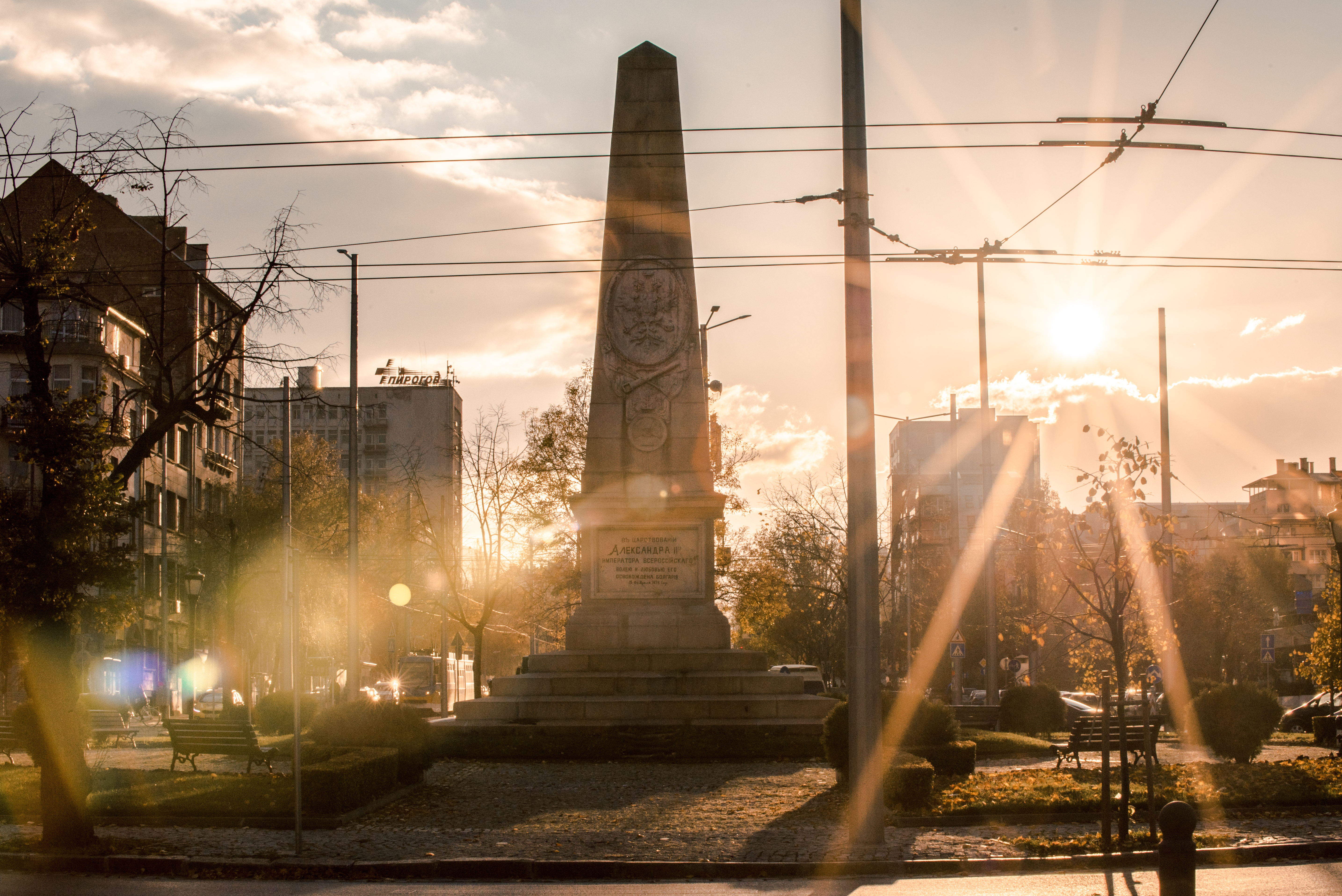
The Russian Monument in Sofia
Historic Landmark · Sofia, Bulgaria
About The Russian Monument in Sofia
Welcome to The Russian Monument in Sofia, widely recognized simply as the Russian Monument (Руски паметник). Located in the heart of Sofia, Bulgaria, this historic landmark commemorates the Russian soldiers who liberated Bulgaria from Ottoman rule in 1878 and stands as a symbol of Bulgarian-Russian friendship and gratitude.
When visiting The Russian Monument in Sofia, visitors can easily explore surrounding historical landmarks and points of interest, including Alexander Nevsky Cathedral and St. Sofia Church.
Visit Tips
- The monument is accessible 24/7 as it's an outdoor landmark.
- Best time to visit is during daylight hours for photos.
- Located in a busy intersection, be careful when crossing streets.
- Combine your visit with nearby attractions like St. Sofia Church.
Highlights
- Historic 19th century monument
- Symbol of Bulgarian liberation
- Central location in Sofia
- Beautiful sculptural details
About The Russian Monument
Basic Information
Official Name
The Russian Monument (Руски паметник)
Attraction Type
Historic Monument
Google Rating
4.4 (7,267)
Accessibility
Partially accessible
Plus Code
M8R6+W5 Sofia, Bulgaria
Address
pl. "Ruski pametnik", blvd. "Makedonia" 51, 1606 Sofia, Bulgaria
Visiting Information
Access
Open 24/7 (outdoor monument)
Best Time to Visit
Spring: Pleasant weather, comfortable for walking
Summer: Warm days, best visited in morning or evening
Best Time to Visit
Autumn: Mild temperatures, beautiful city views
Winter: Snow can create beautiful scenery
Daytime visits recommended for safety and the best photos.
Admission Information
Monument Access
Free - outdoor public monument
Parking
Street parking available nearby (paid zones)
Guided Tours
No guided tours provided. Guests are welcome to explore and visit freely on their own.
How to Get Here
From Sofia Center
The monument sits in Sofia Center at the junction of Makedonia and Evlogi Georgiev boulevards, about a 15-20 minute walk from the central pedestrian zone and most major hotels.
From Sofia Airport
Take the metro (Line 1 or 2) to Serdika Station, then transfer to a tram, bus or trolley towards Ruski Pametnik, or continue by taxi.
By Public Transport
The "Руски паметник" (Ruski Pametnik) tram stop is served by tram lines 4, 5 and 15. Bus and trolley lines also stop on Makedonia Boulevard.
Public Transport
Trams 4, 5 and 15 stop at the "Руски паметник" stop at the square; bus lines 72, 76, 204 and trolleys 5, 8 stop nearby on Makedonia Boulevard. Metro Line 3 is about a 10-15 minute walk away.
Walking
About 20-25 minutes from Alexander Nevsky Cathedral, or 15-20 minutes from the central pedestrian zone and Vitosha Boulevard.
Driving
Located on Makedonia Boulevard, a major thoroughfare in Sofia, at the junction with Evlogi Georgiev Boulevard.
Visitor Facilities Nearby
Practical services around the monument, listed by type only (independent, non-commercial guide)
Public Restrooms
Public toilets are limited directly around the busy junction. The nearest restrooms are typically inside nearby shopping centres, hotels and cafés, which generally welcome visitors; plan ahead before long walks.
Parking
Paid on-street parking (blue and green zones) operates in the surrounding streets, free on Sundays and outside charging hours. Spaces are limited and the area is busy, so public transport is recommended.
Dining & Cafés
A wide choice of restaurants, cafés, bakeries and fast-food places sits within a short walk, including traditional Bulgarian taverns serving local cuisine. We list types only, not specific businesses.
Hotels & Accommodation
Sofia's city centre offers hotels, boutique hotels, apartments and hostels within walking distance of the monument, suitable for all budgets.
Shops & Supermarkets
Convenience stores and supermarkets are scattered across the centre, with larger shopping centres about 10-15 minutes away on foot.
Fuel & EV Charging
Petrol stations are scarce in the city centre, so refuel before entering Sofia. Public electric-vehicle charging points are available at some car parks and public areas.
About The Russian Monument
History & Significance
The Russian Monument was unveiled on 29 June 1882, the first monument built in Sofia after the Liberation. It honors the Russian soldiers who fell during the Russo-Turkish War (1877-1878), which ended nearly five centuries of Ottoman rule over Bulgaria. The project was funded by donations collected from the Russian people; the names of the designers remain unknown to official records.
Architecture & Design
The monument is a truncated four-sided pyramid (obelisk) set on a three-step base. On its western side it bears the inscription "Не нам, не нам, а имени Твоему" ("Not unto us, not unto us, but to Thy name") with the dates 1877-1878. The eastern side features a stone relief of the coat of arms of the Russian Empire together with a St George Cross, a Russian military decoration. All inscriptions on the monument are in Russian.
Location & Surroundings
The monument is situated at the intersection of Makedonia Boulevard and Evlogi Georgiev Boulevard in Sofia Center. The location, known in Bulgarian as пл. „Руски паметник" (Ploshtad "Ruski Pametnik", Russian Monument Square), is a major traffic junction and public space in the city.
Preservation & Status
The Russian Monument is protected as a cultural heritage site by the Bulgarian government. Over the years, it has undergone several restorations to preserve its historical and artistic value. It remains one of Sofia's most recognizable landmarks.
History, Stories & Legends
Well-documented accounts and traditions connected to the monument
The first monument of liberated Sofia
Unveiled on 29 June 1882, the Russian Monument was the very first monument raised in Sofia after the Liberation. Funds were collected by donations from the Russian people, and the city's gratitude shaped one of its most symbolic public spaces.
Documented historyThe mystery of the unknown designer
Official records leave the authorship of the project unknown. Two names are usually suggested by historians: the architect Vokar, who designed monuments in Dobrich, Pleven, Razgrad and Svishtov, and academician V. Yosifov Shervurd. Neither attribution is conclusively confirmed.
Open questionOn the road of the fleeing Ottoman commander
The monument stands along the route taken by the Ottoman commander Osman Nuri Pasha when he fled Sofia towards Pernik on 22 December 1877, during the Russo-Turkish War. Its location itself carries historical meaning.
Documented historyThe inscriptions and their meaning
On its western side the monument bears the inscription "Не нам, не нам, а имени Твоему" ("Not unto us, not unto us, but to Thy name") with the dates 1877-1878 - words of Orthodox tradition used by the Imperial Russian Army. The eastern side shows the coat of arms of the Russian Empire and a relief of the St George Cross, a Russian military decoration.
Documented detailWreaths on 3 March
Every year on 3 March - Bulgaria's Liberation Day, marking the Treaty of San Stefano signed on 3 March 1878 - citizens and organisations lay wreaths and flowers at the monument, keeping the memory alive.
Living traditionRecommended Route
Explore the Russian Monument and nearby attractions in Sofia.
Start at the Russian Monument
Walk to St. Sofia Church (10 min)
Visit the Alexander Nevsky Cathedral (15 min)
Explore the National Archaeological Museum (20 min)
End at Vitosha Boulevard for shopping/dining
Sofia Monuments Walking Guide
The Russian Monument is a great starting point for exploring Sofia's other historic monuments. Combine them into a single walking itinerary across the city center.
Tsar Liberator Monument (Паметник на Цар Освободител)
Commemorates Emperor Alexander II of Russia on Tsar Osvoboditel Boulevard - one of Sofia's most photographed landmarks.
Monument to the Unknown Soldier
An eternal flame in front of Alexander Nevsky Cathedral, honoring the Bulgarian soldiers who fell in the First World War.
The Bells (Камбаните)
A bell monument in the International Children's Park at the foot of Vitosha Mountain, with bells donated by children from around the world.
Photo Gallery
The Russian Monument in Sofia
The Russian Monument overview
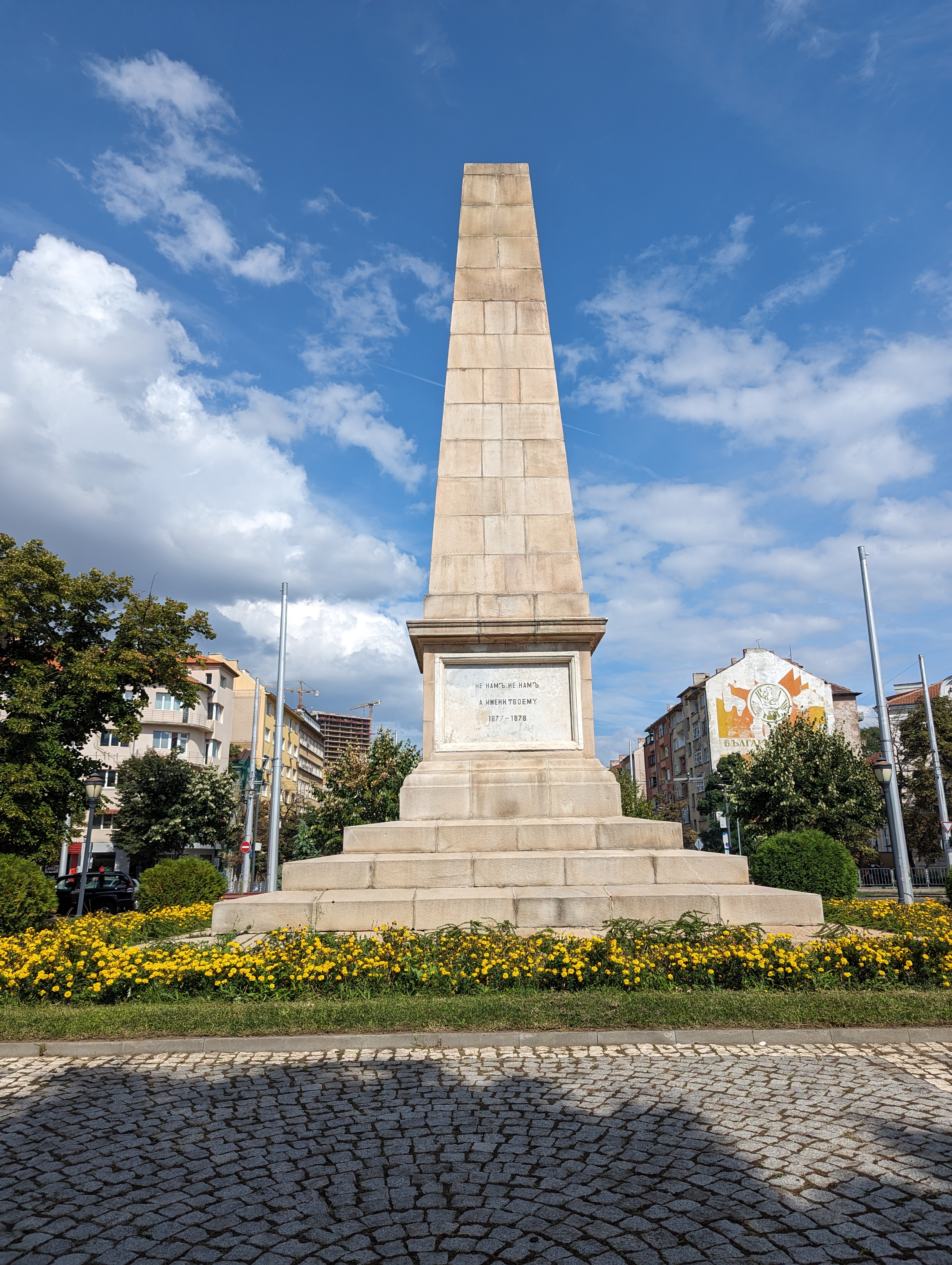
Monument base with sculptures
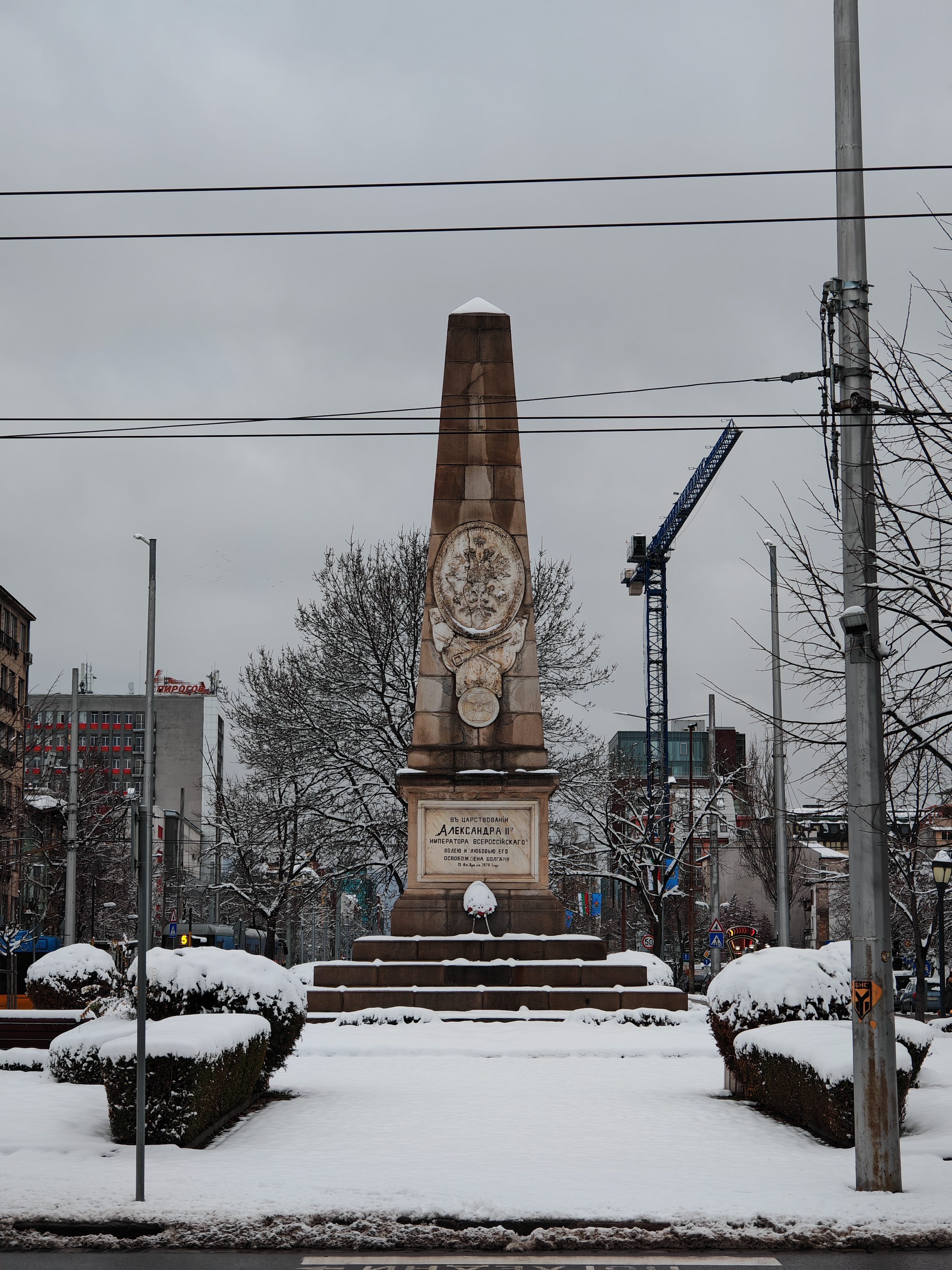
Bronze eagle detail
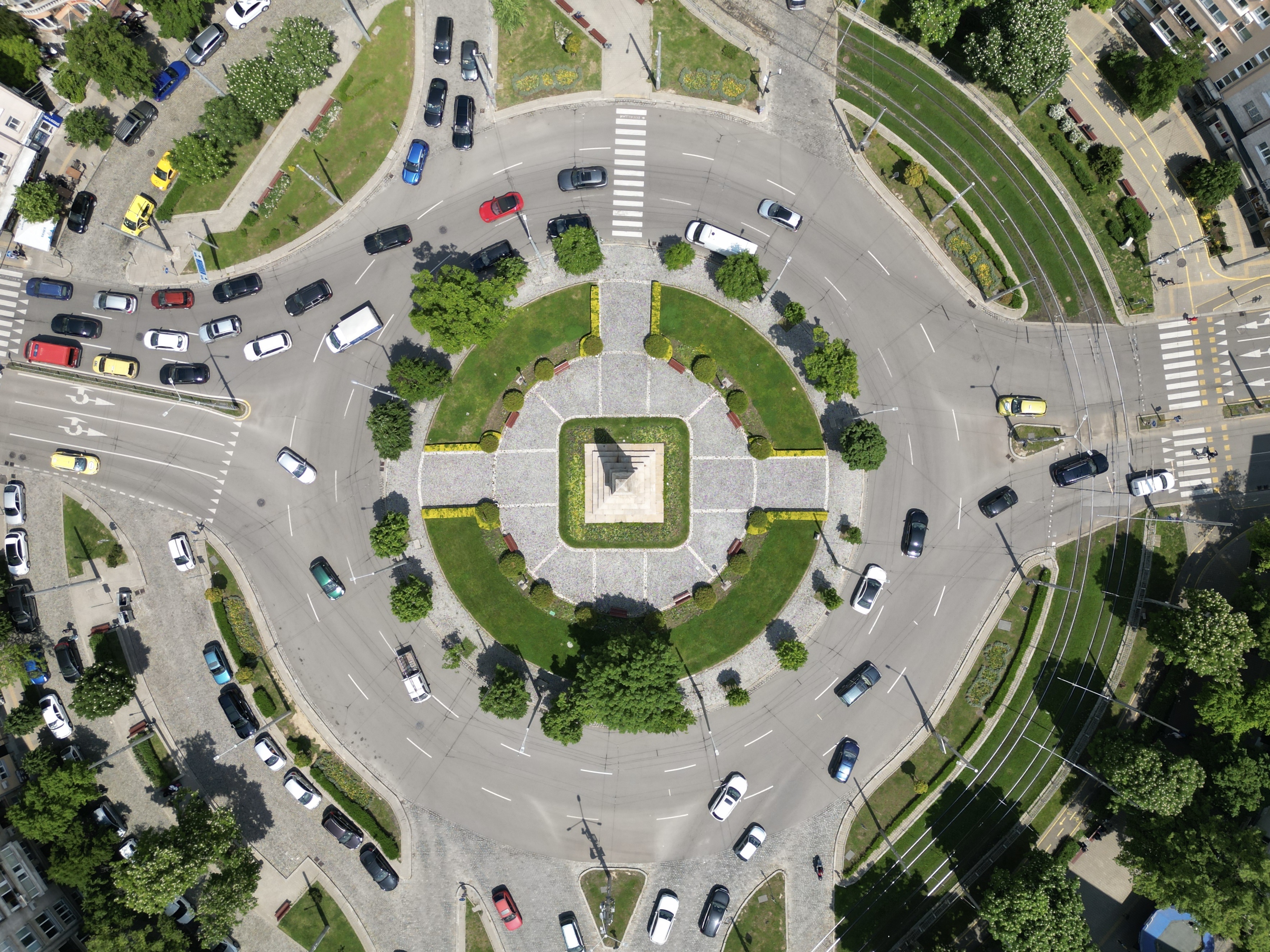
Monument in daylight
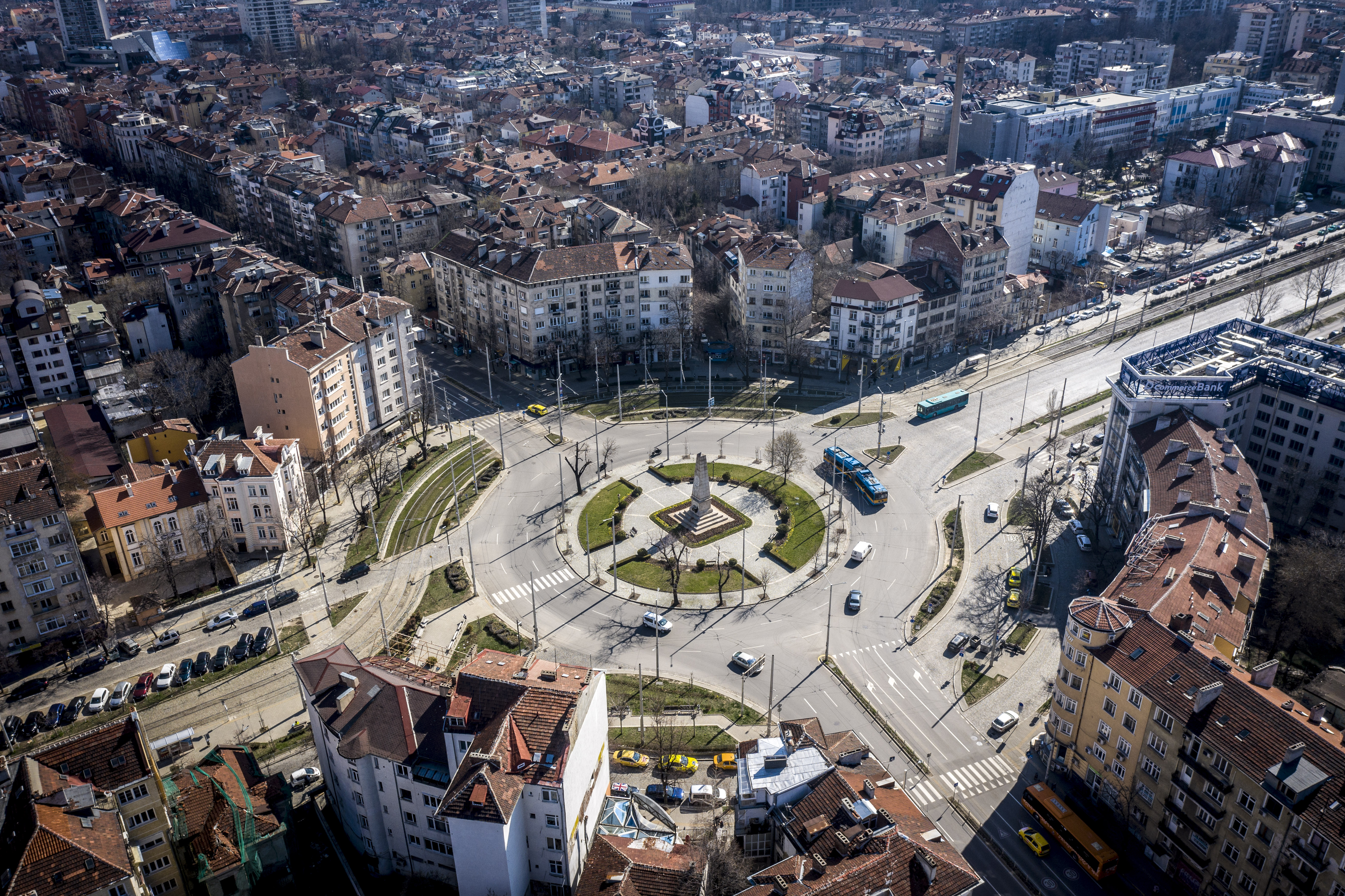
Surrounding square view
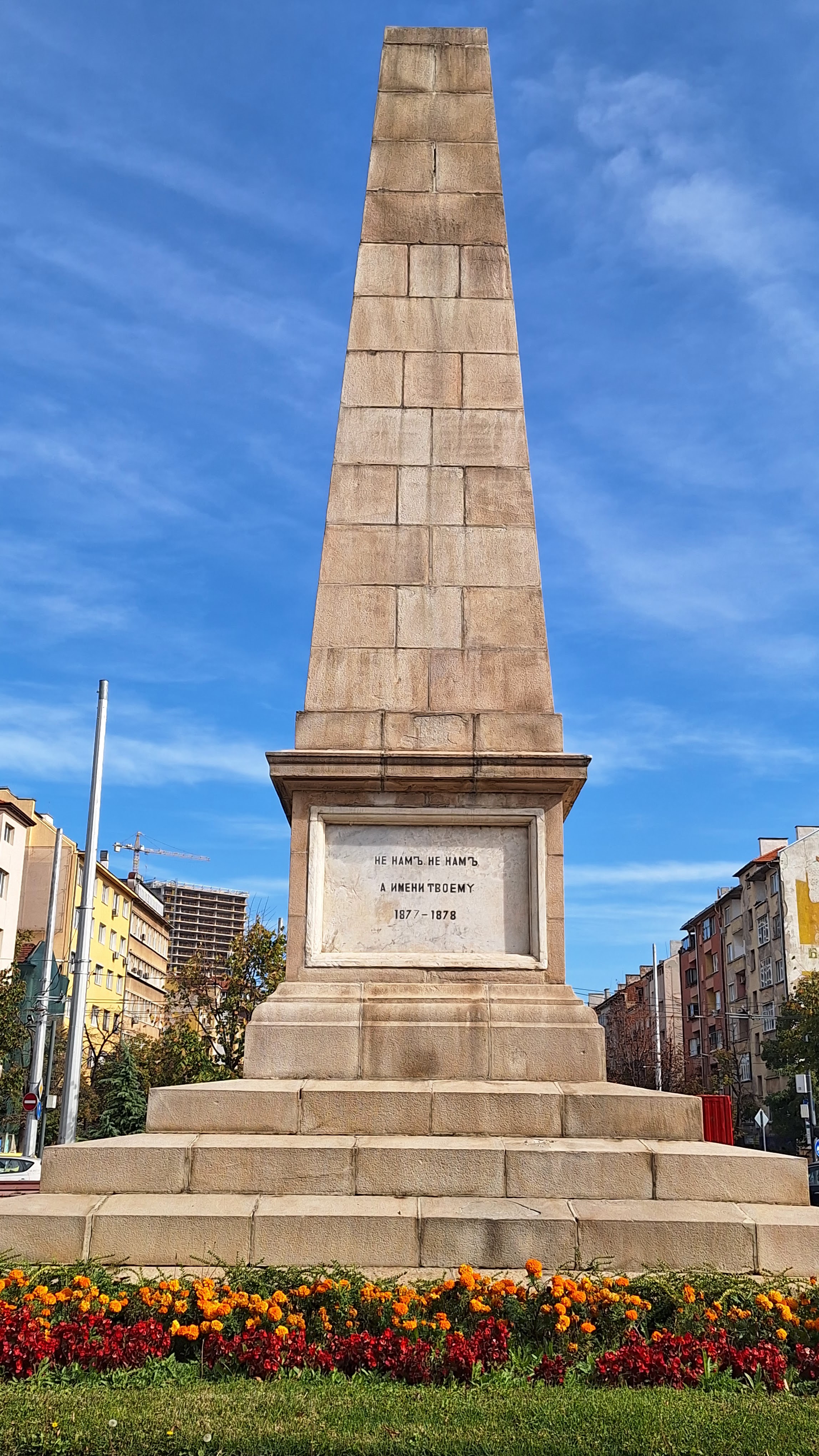
Historical plaque
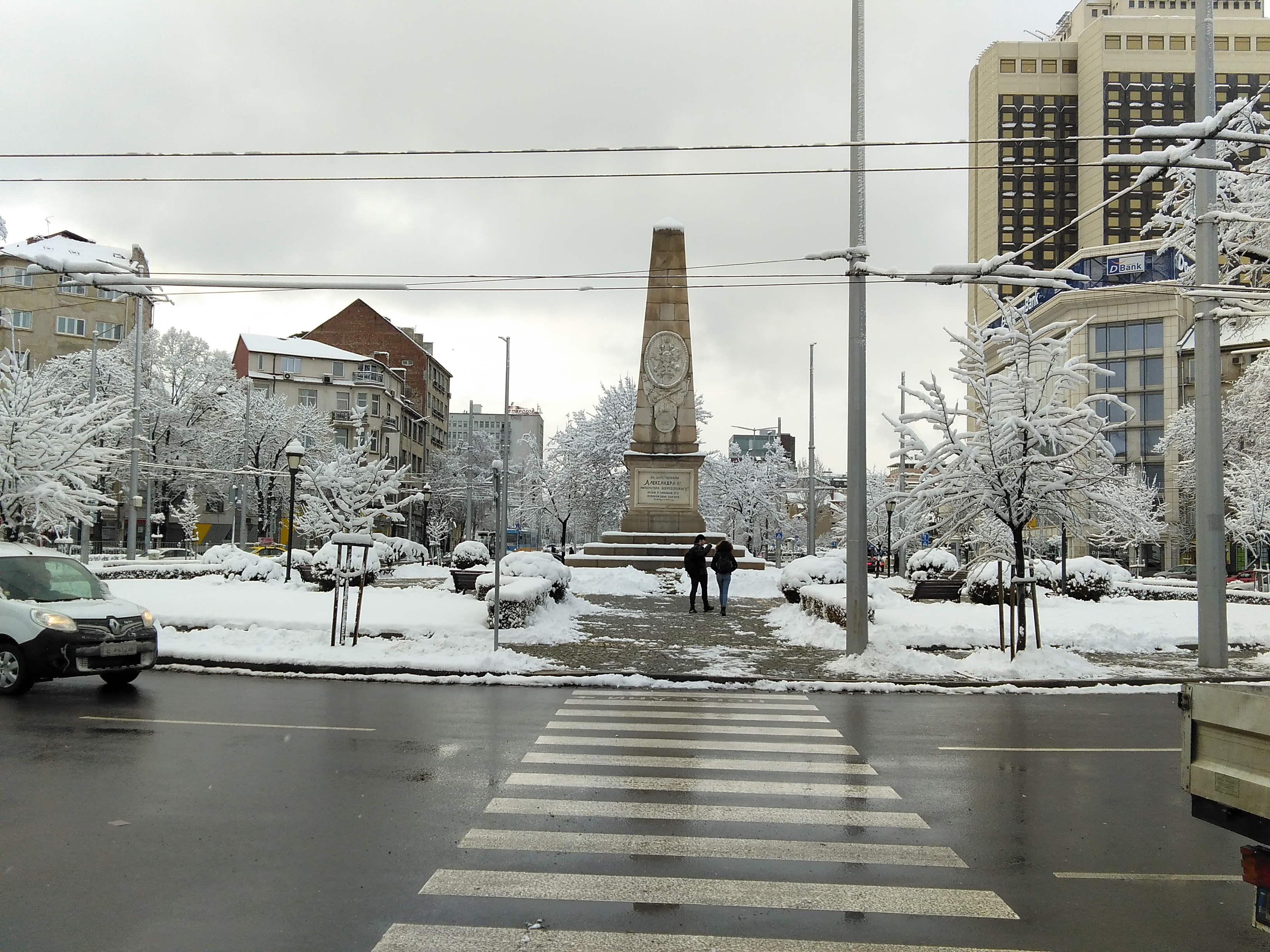
Monument at sunset
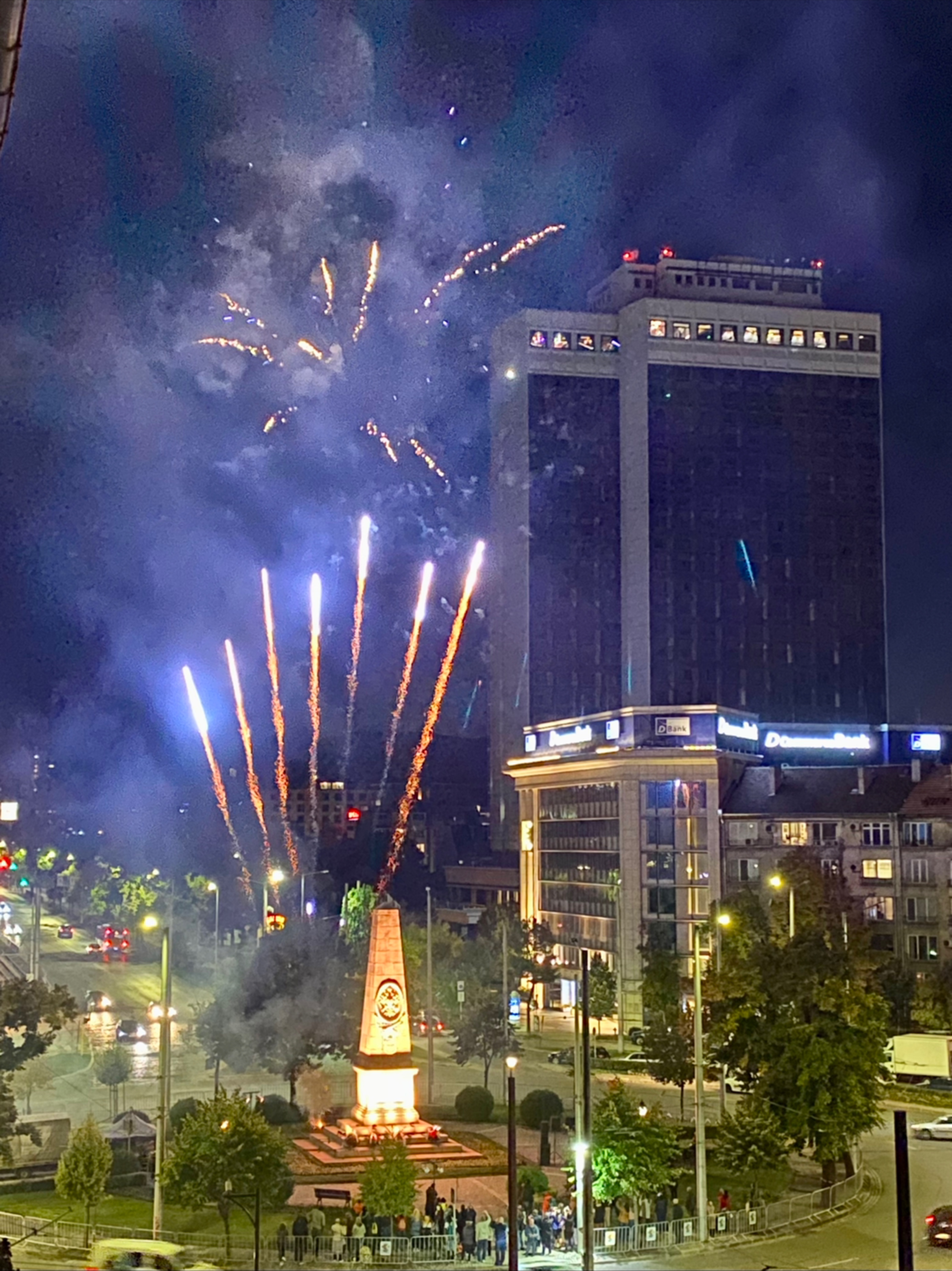
Sculptural reliefs detail
Visitor Reviews
Reviews can be viewed via Google Maps.
A beautiful historic monument in the heart of Sofia. Great place to learn about Bulgarian history.
Impressive monument with deep historical significance. A must-see when in Sofia.
Nice landmark, though the traffic around it is quite busy. Good for a quick stop and photos.
An important piece of our history. The monument is well-preserved and beautifully situated.
Historic and symbolic. The area is busy but the monument itself is worth seeing.
Love the architecture and the history behind it. A peaceful spot in the middle of the city.
Frequently Asked Questions
Q:Where is The Russian Monument located?
The monument is located at pl. "Ruski pametnik", blvd. "Makedonia" 51, 1606 Sofia, Bulgaria. The location is well-served by public transport.
Q:Is there an entrance fee?
No, the monument is an outdoor public landmark that can be viewed free of charge at any time.
Q:What are the visiting hours?
As an outdoor monument, it is accessible 24 hours a day, 7 days a week. However, daytime visits are recommended for the best experience and safety.
Q:How do I get to the monument?
The monument is accessible by public transport: trams 4, 5 and 15 stop at the "Руски паметник" stop at the square, and buses and trolleys stop nearby on Makedonia Boulevard. Metro Line 3 is about a 10-15 minute walk away. Taxis and ride-sharing services are also readily available in Sofia.
Q:What landmarks are near the Russian Monument?
The Russian Monument stands near several major Sofia landmarks, including Alexander Nevsky Cathedral, St. Sofia Church and the National Archaeological Museum – all within a 10–20 minute walk.
Q:Is the Russian Monument accessible to visitors with reduced mobility?
The monument is an outdoor landmark in an open public square and can be approached from the surrounding pavements. Some crossings may be uneven, so visitors with mobility needs are advised to approach from the main pavement along Makedonia Boulevard.
Q:Are there restrooms, restaurants or shops near the monument?
Public restrooms are limited around the junction itself - the nearest ones are usually inside nearby shopping centres, hotels and cafés. Restaurants, cafés, bakeries and shops are within a short walk, and supermarkets and shopping centres are about 10-15 minutes away. Paid street parking is available in the surrounding streets, free on Sundays and outside charging hours.
Sources & Official References
This guide is compiled from official and authoritative Bulgarian sources. For official updates and regional tourism information, visit the Sofia Tourism Board or the Bulgaria Ministry of Tourism.